01
HBOT
Hyperbaric oxygen therapy, when clinically indicated.

Private, individualized recovery
We are not part of the old healthcare system. We are creating what comes next. Welcome to the future of healing.
A cutting-edge, multifaceted healing system designed around the whole person. Advanced technologies and therapeutic strategies converge with a carefully sequenced psycho-spiritual approach to psychedelic and sacred medicine, supported by holistic care, conscious wellness, superfood nutrition, preparation, and integration.
Founder statement · 01
I went through 17 rehabs. I know what it feels like to become a number inside a model that has already decided what your recovery should look like.
So I built the opposite: a private environment, no group therapy by default, no one-size-fits-all package, no industrial cafeteria food. Every decision begins with the person in front of us.
This is not a menu of treatments. It is an individualized sequence of preparation, care, recovery, and integration.

The integrated system · 02
An adaptive sequence rather than a standardized package. Assessment determines what comes next—and what does not.
Not every guest receives every therapy. Medical screening, suitability, consent, and ongoing response guide the plan.
Individual
Guest
Medical feature · 03
A named IV protocol formulated and administered by the medical team as one possible part of individualized care.
The founder’s clinical rationale is that nutritional and physiologic support may help create a more stable foundation while a guest moves through demanding recovery work. The formulation, timing, and suitability are determined medically—not from a fixed recipe.
In the founder’s experience, some guests report meaningful changes during integrated care. Those observations inform the protocol, but they are not proof that an IV rebuilds the brain, resets receptors, reverses medication-related injury, or reliably accelerates tapering.
Those mechanisms and outcomes remain hypotheses requiring appropriate clinical research. Medication changes, including benzodiazepine or SSRI tapering, require individualized medical management.
The protocol · 04
Modalities are not a checklist. They are considered, sequenced, modified, or excluded according to screening, objectives, response, and medical judgment.
Hyperbaric oxygen therapy, when clinically indicated.
Physician-directed infusion within an individualized plan.
Considered only after rigorous screening and risk review.
Facilitated ceremonial work when appropriate and lawful.
A carefully screened, context-dependent modality.
Preparation, supported experience, and integration.
Never routine; suitability is individually determined.
Photobiomodulation as a noninvasive supportive therapy.
Heat-based recovery support with clinical oversight.
Massage designed around the guest’s physical state.
Nervous-system-aware movement and breath practice.
Whole-food nourishment built around individual needs.
A private room and bathroom—not institutional living.
Considered materials, linens, toiletries, and food.

What the science says—and what it does not say
Published research can inform risk, dosing context, and what has been observed in defined populations. Its strength varies sharply by intervention and outcome.
Fifteen years of hands-on observation can guide questions and individualized decisions. It is valuable—but it is not the same as controlled evidence.
Proposed mechanisms may offer a rationale for further study. They should never be presented as proven human outcomes.
Selected evidence · 05
A curated reading room—not a claim of proof. Each card pairs the measured finding with the limitation that should travel with it.
Regulatory consumer guidance · 13 FDA-cleared indications
Finding
The FDA describes the specific conditions for which hyperbaric chambers have been cleared for marketing.
Limitation
Clearance for listed indications does not establish efficacy for addiction, psychiatric conditions, or unlisted uses.
Systematic review and meta-analysis · 8 studies · 570 TBI participants
Finding
The analysis reported domain-specific signals in cognition and sleep outcomes.
Limitation
PTSD and emotional outcomes remained uncertain, and study differences limit broad conclusions.
Systematic review · Clinical studies in mild TBI / PPCS
Finding
The review identified possible benefits across selected outcomes in some studies.
Limitation
Evidence was limited and heterogeneous, with protocols and comparison conditions varying substantially.
Rapid evidence assessment · 12 randomized trials
Finding
The assessment found mixed results across trials and outcomes.
Limitation
Methodologic variation and sham-comparator questions prevented a definitive conclusion.
Randomized, double-blind, placebo-controlled trial · 29 patients with treatment-resistant depression
Finding
A single session produced greater short-term improvement in depression scores than placebo at selected time points.
Limitation
The trial was small and short-term; findings do not establish durable benefit or broad suitability.
Systematic review · 18 prospective studies
Finding
Prospective studies suggested preliminary longer-term changes in selected psychological measures.
Limitation
The literature needs larger controlled studies and more consistent methods before causal claims can be made.
Scientific review · Human clinical literature
Finding
The review discussed emerging evidence for antidepressant effects and possible mechanisms.
Limitation
The evidence base remained early, with small samples and limited controlled follow-up.
Systematic review and meta-analysis · Studies including ayahuasca and other classic psychedelics
Finding
Pooled results suggested reductions in depressive symptoms across the included psychedelic literature.
Limitation
Substances, settings, designs, and follow-up periods differed; pooled findings are not specific proof for one protocol.
Observational study · 50 participants with OUD
Finding
Participants showed changes in withdrawal and craving measures after treatment.
Limitation
Without randomization or a control group, the study cannot establish that ibogaine caused the observed changes.
Open-label observational safety study · 14 patients with OUD
Finding
The study documented clinically relevant, reversible QTc prolongation and ataxia.
Limitation
The small sample does not define population-level risk; findings underscore the need for intensive screening and monitoring.
Preclinical study · Animal / laboratory models
Finding
The study examined changes involving GDNF and BDNF expression after ibogaine exposure.
Limitation
Preclinical molecular findings cannot be translated directly into treatment outcomes in humans.
Mechanistic review · Preclinical and mechanistic literature
Finding
The review discusses GDNF-related and other proposed neurobiological pathways associated with ibogaine.
Limitation
Mechanistic hypotheses are not clinical proof of safety, efficacy, or brain repair in people.
Observational follow-up · Participants followed for 12 months
Finding
The study reported changes in opioid use and related outcomes over follow-up among respondents.
Limitation
Attrition, self-report, selection effects, and the absence of a randomized control limit causal interpretation.
Research evolves. Linked records should be reviewed in full with qualified clinicians, including methods, adverse events, contraindications, and applicability to the individual.
Time as a therapeutic resource · 06
Depth takes time. Four weeks is not a universal medical requirement; it is often the beginning of enough space to prepare carefully and recover without rushing.
History, goals, medication review, diagnostics, and trust.
Suitability and risk are assessed before intensive interventions.
The body and nervous system are given protected time after demanding work.
Insights become choices, routines, relationships, and a plan for what follows.
Program length is individualized. Depending on needs, response, and clinical judgment, care may extend for weeks or months.
The environment · 07
Food and environment are not background details. They are the conditions in which the work happens.

My Why · 08
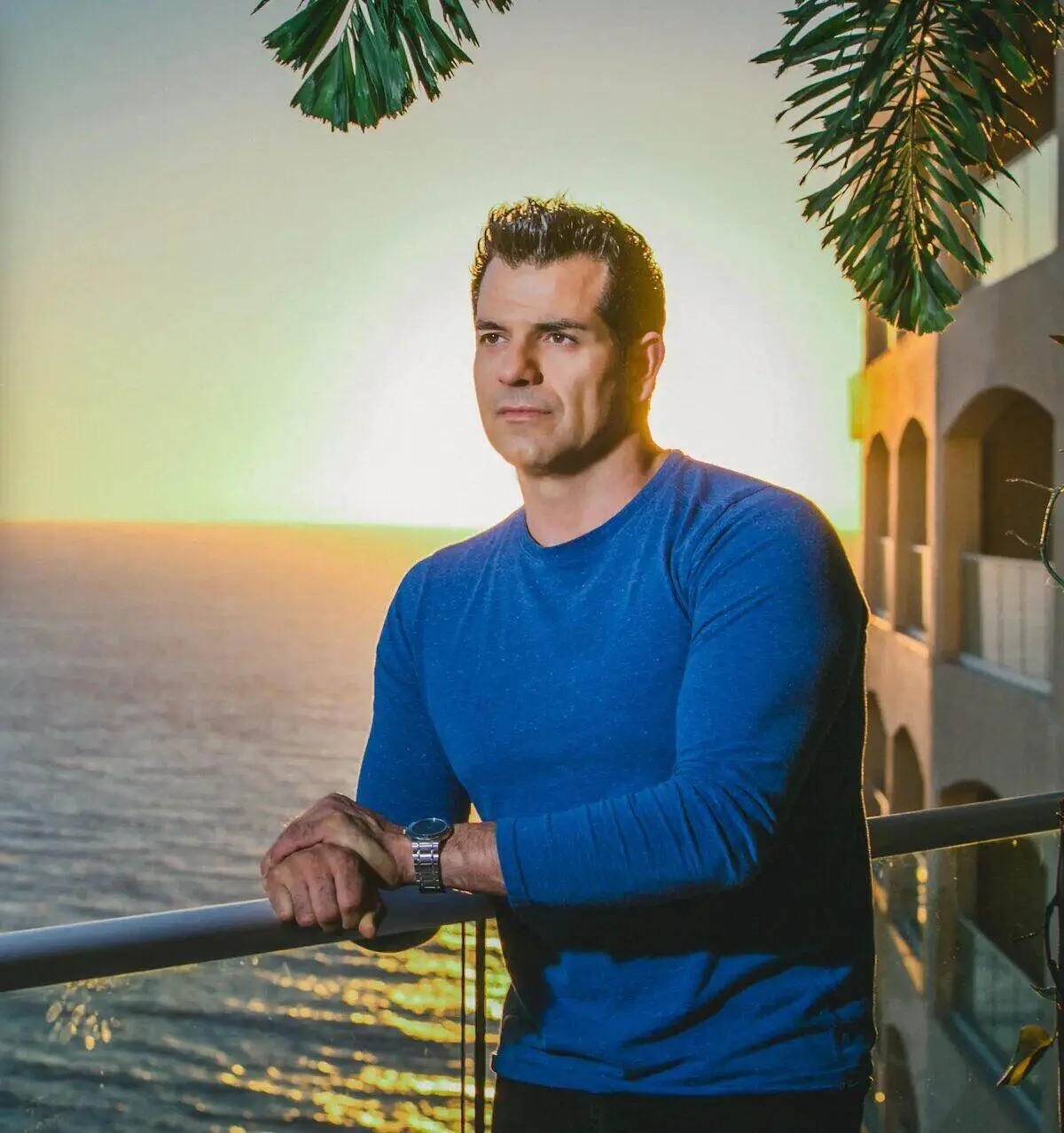
I speak from my own history: 17 rehabs, the disorientation of being treated like a diagnosis, and the loss of my brother to suicide. That loss is part of why I refused to stop asking whether care could be more personal, more rigorous, and more human.
I did not build Holistic Sanctuary because I believe one intervention saves everyone. I built it because people deserve to be seen clearly—and because preparation, medical responsibility, environment, and integration should not be separated from the work.
My promise is not an outcome. It is that we will take the individual seriously.
A private conversation
Begin with a confidential assessment of your history, circumstances, and what responsible next steps could look like.